Siem Reap is the gateway to the Angkor Archaeological Park, one of the world’s greatest cultural treasures. The town itself has transformed into a vibrant, visitor-friendly base with excellent hotels, restaurants, markets and nightlife, while remaining close to countryside villages and the Tonle Sap lake.
Angkor Archaeological Park – Main Temples
The Angkor complex is vast. A 1-day pass covers the highlights; 3- or 7-day passes are better for a deeper visit. Buy tickets at the official ticket office (or online when available). Dress modestly (shoulders and knees covered).
Angkor Wat
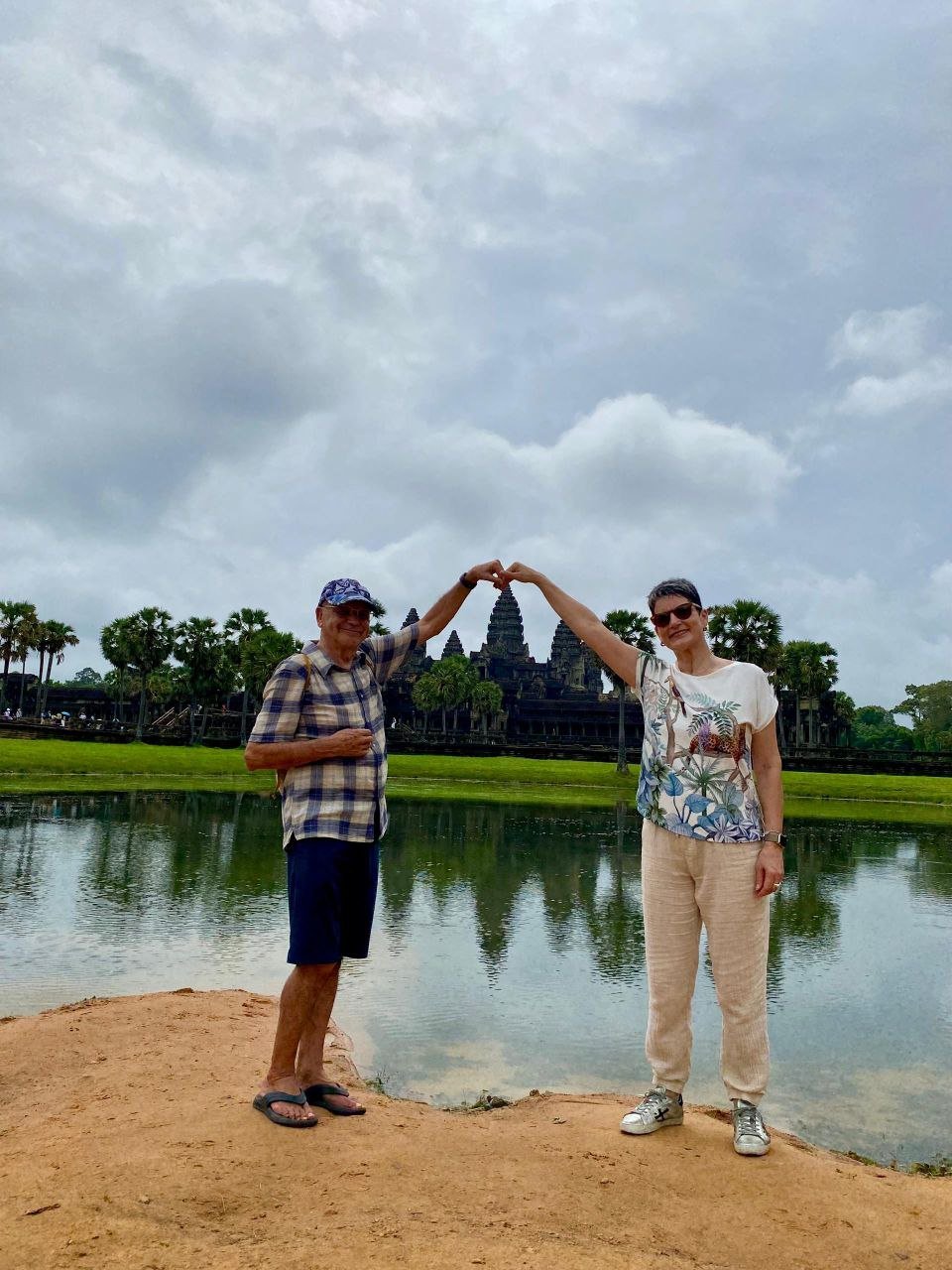
The largest religious monument in the world and Cambodia’s national symbol. Built in the early 12th century by King Suryavarman II as a Hindu temple dedicated to Vishnu, later becoming Buddhist. Famous for its five towers, vast galleries of bas-reliefs (including the Churning of the Ocean of Milk), and sunrise views from the reflecting pools.
- Best time: Sunrise (arrive early) or late afternoon when light is softer and crowds thinner
- Allow: 2–4 hours minimum
- Highlight: Central sanctuary, bas-relief galleries, outer enclosure and moat
Angkor Thom & Bayon
The great walled city of Angkor Thom (late 12th–early 13th century, King Jayavarman VII). Enter via the South Gate with its giant faces and demon/god causeway. Inside: Bayon (temple of 200+ smiling stone faces), Baphuon, Phimeanakas, Terrace of the Elephants, Terrace of the Leper King, and the Royal Palace area.
- Best time: Morning or late afternoon
- Allow: Half day to explore the main monuments
- Highlight: Bayon’s face towers, Elephant Terrace bas-reliefs, South Gate approach
Ta Prohm
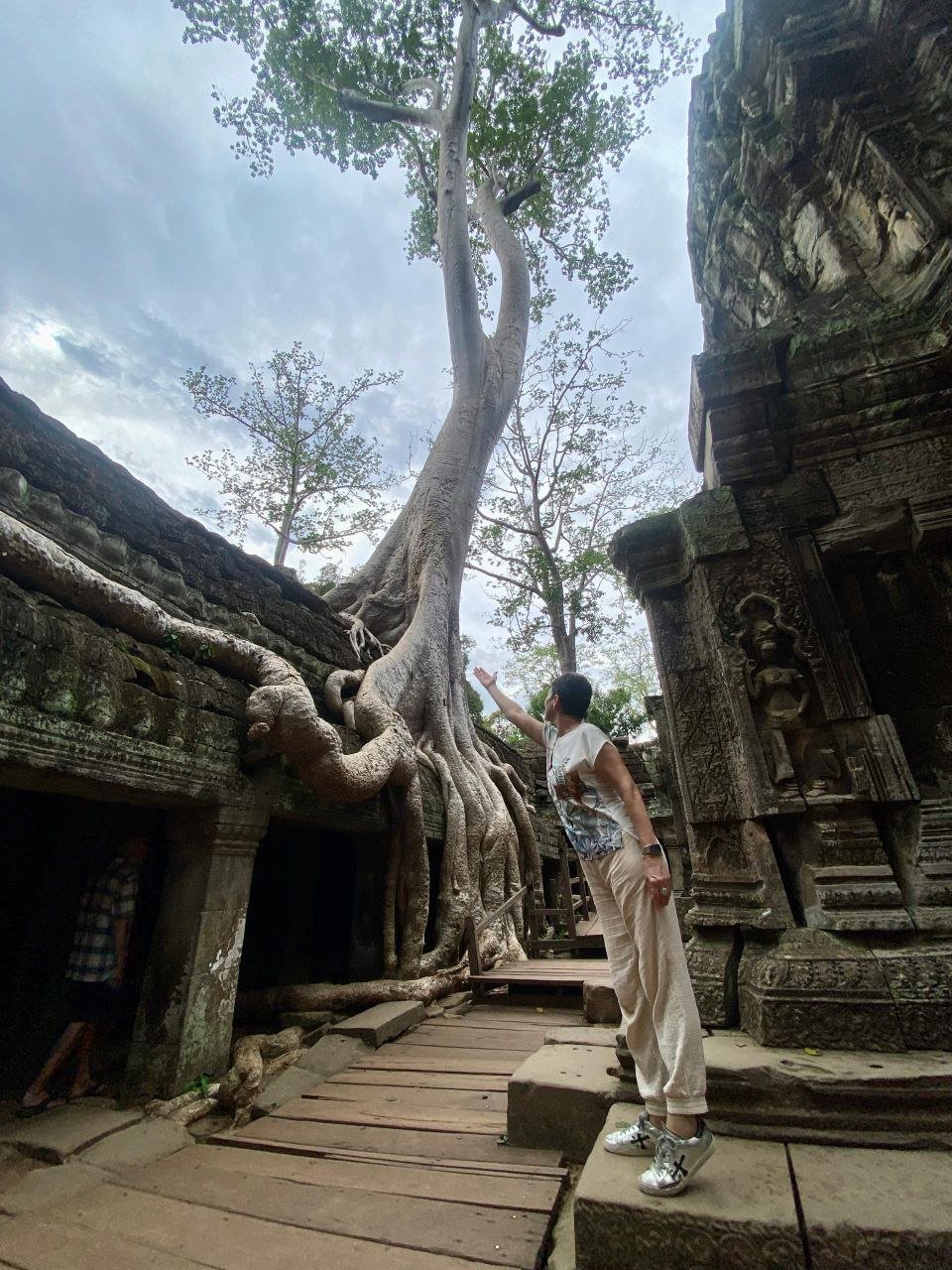
The iconic “jungle temple” where massive silk-cotton and fig trees grow through the ruins. Built by Jayavarman VII as a Buddhist monastery. Atmospheric corridors, collapsed galleries and tree roots make it one of the most photographed sites (and a filming location for Tomb Raider).
- Best time: Early morning for soft light and fewer people
- Allow: 1–1.5 hours
- Highlight: Tree roots over doorways and walls, central sanctuary
Banteay Srei
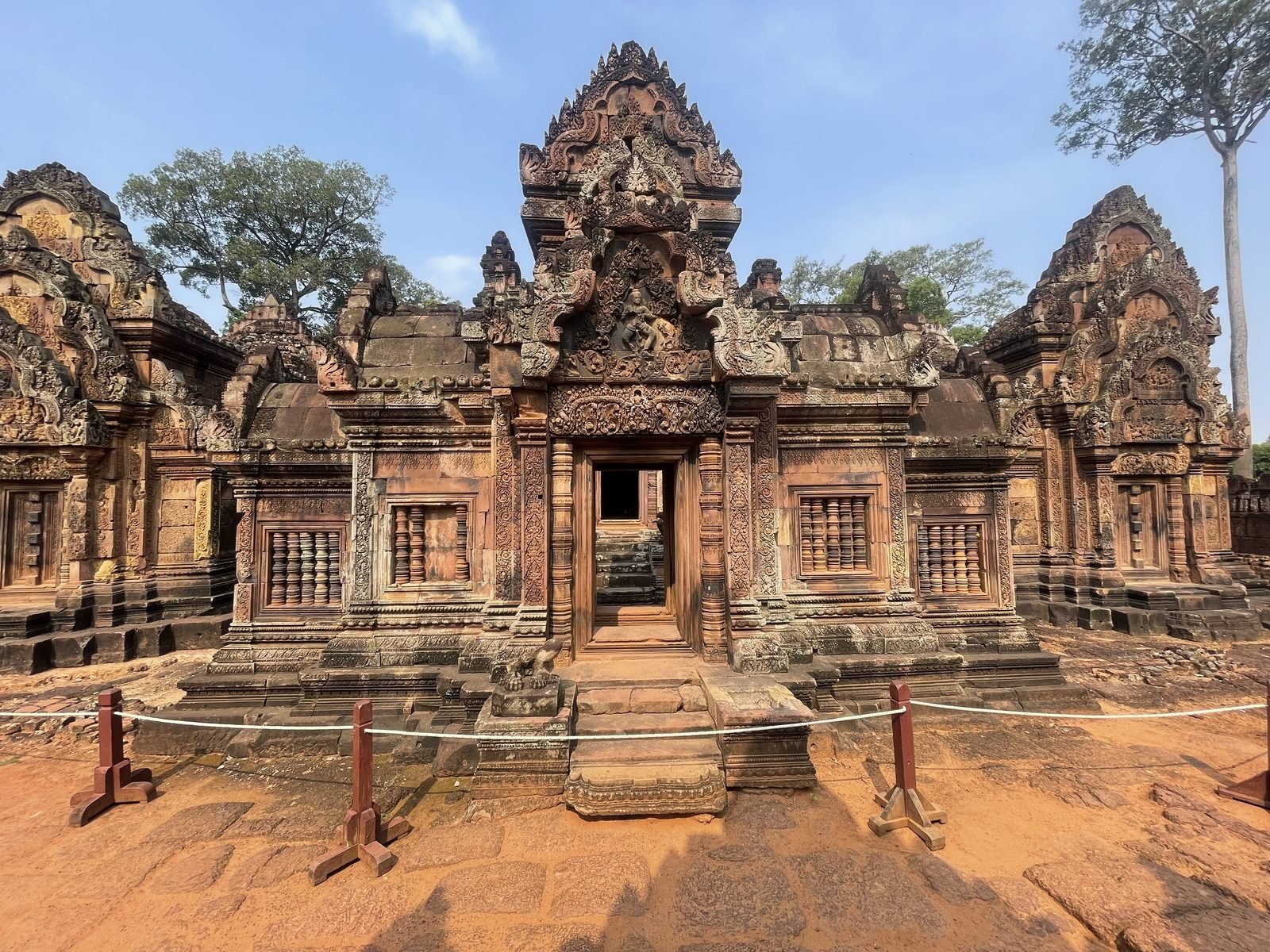
Often called the “jewel of Khmer art.” A small 10th-century temple in pink sandstone with exceptionally fine, deep carvings of Hindu mythology. About 30–40 minutes north of the main park. Best visited in the morning.
- Distance: ~37 km from Siem Reap town
- Allow: 1–1.5 hours on site + travel
- Highlight: Intricate pediments and lintels; soft pink stone in morning light
Preah Khan
A large, atmospheric monastic complex built by Jayavarman VII. Long corridors, stone lintels, a two-storey pavilion and peaceful tree-shaded courtyards. Less crowded than the main circuit temples.
- Allow: 1–1.5 hours
- Highlight: Sacred sword legend, hall of dancers, quiet atmosphere
Neak Pean
A small island temple in the middle of a square artificial lake (Jayatataka baray). Four smaller ponds represent water, earth, fire and wind. Beautiful and photogenic, especially when the water levels are good.
Ta Keo, East Mebon, Pre Rup & Banteay Kdei
- Ta Keo — Massive unfinished pyramid temple; steep climbs and fine views
- East Mebon — Island temple in the East Baray with elephant statues at the corners
- Pre Rup — State temple with brick towers; popular for sunset
- Banteay Kdei — Buddhist monastery temple near Srah Srang, quieter and atmospheric
- Srah Srang — Royal bathing pool; lovely at sunrise or sunset
Roluos Group (Bakong, Preah Ko, Lolei)
Early Angkor-period temples (late 9th century) about 13–15 km east of Siem Reap. Bakong is a stepped pyramid; Preah Ko has six brick towers with fine plaster and carvings; Lolei sits on an island in a former baray. Important for understanding the origins of Angkor architecture.
Beng Mealea
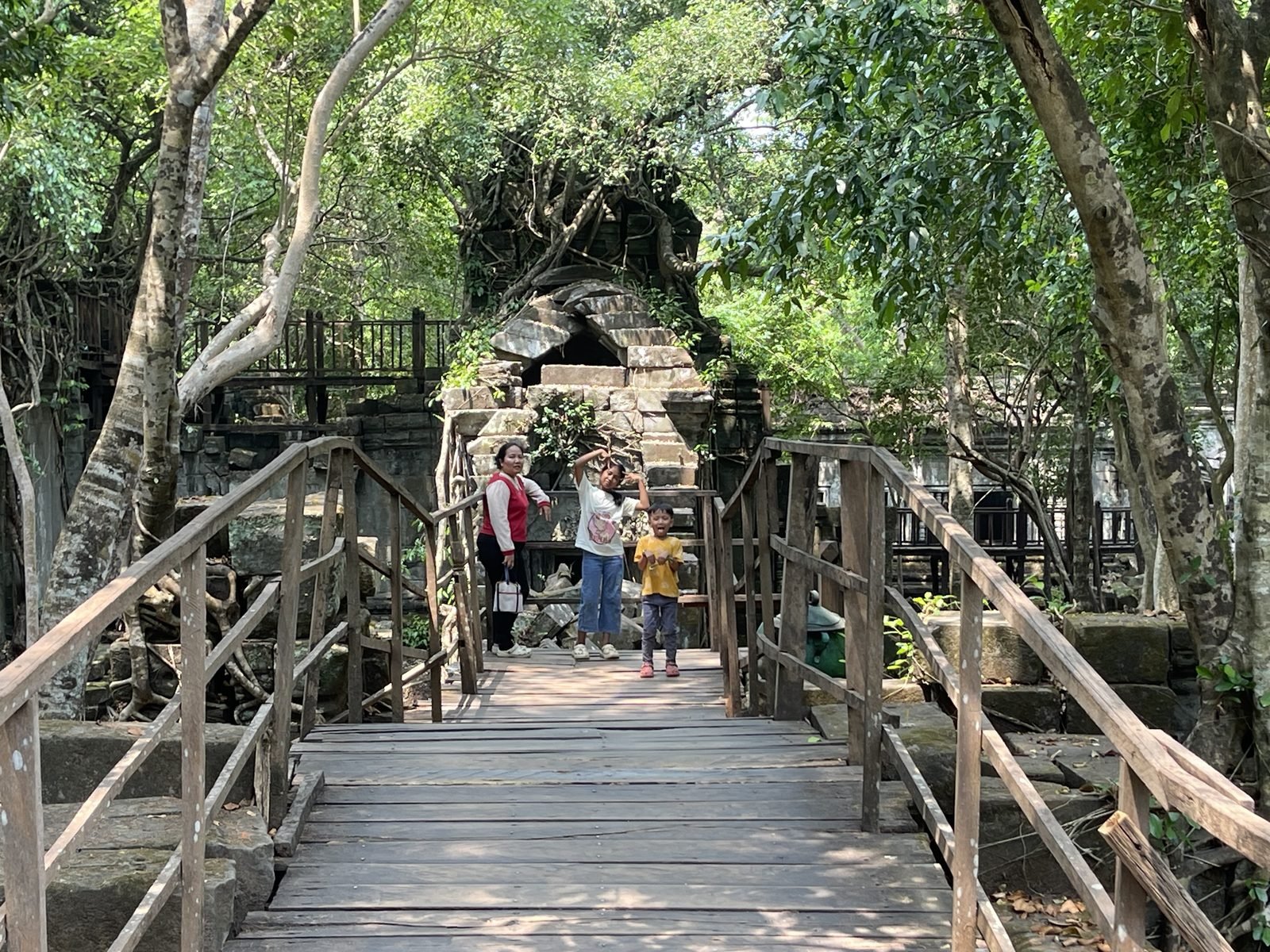
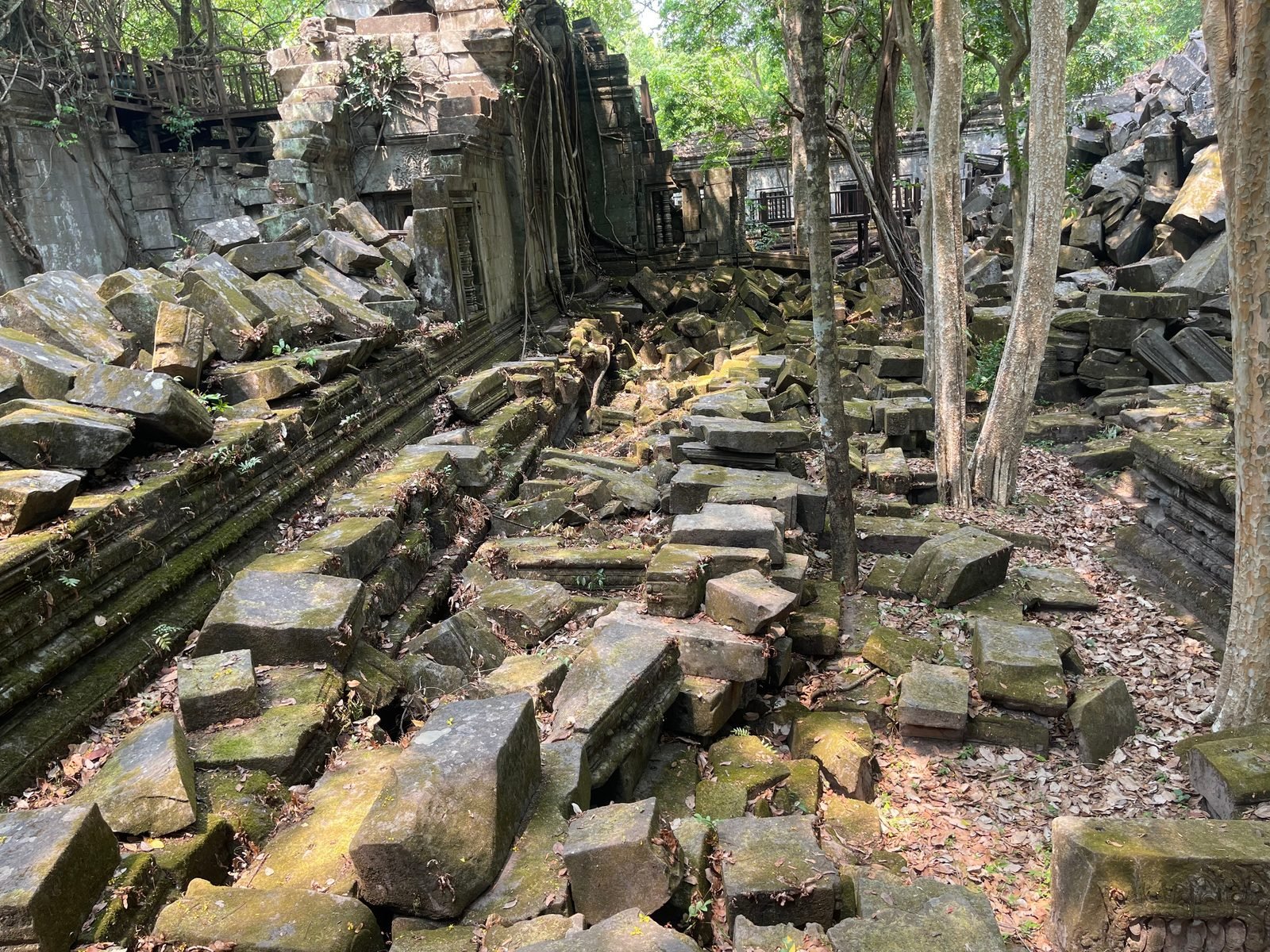
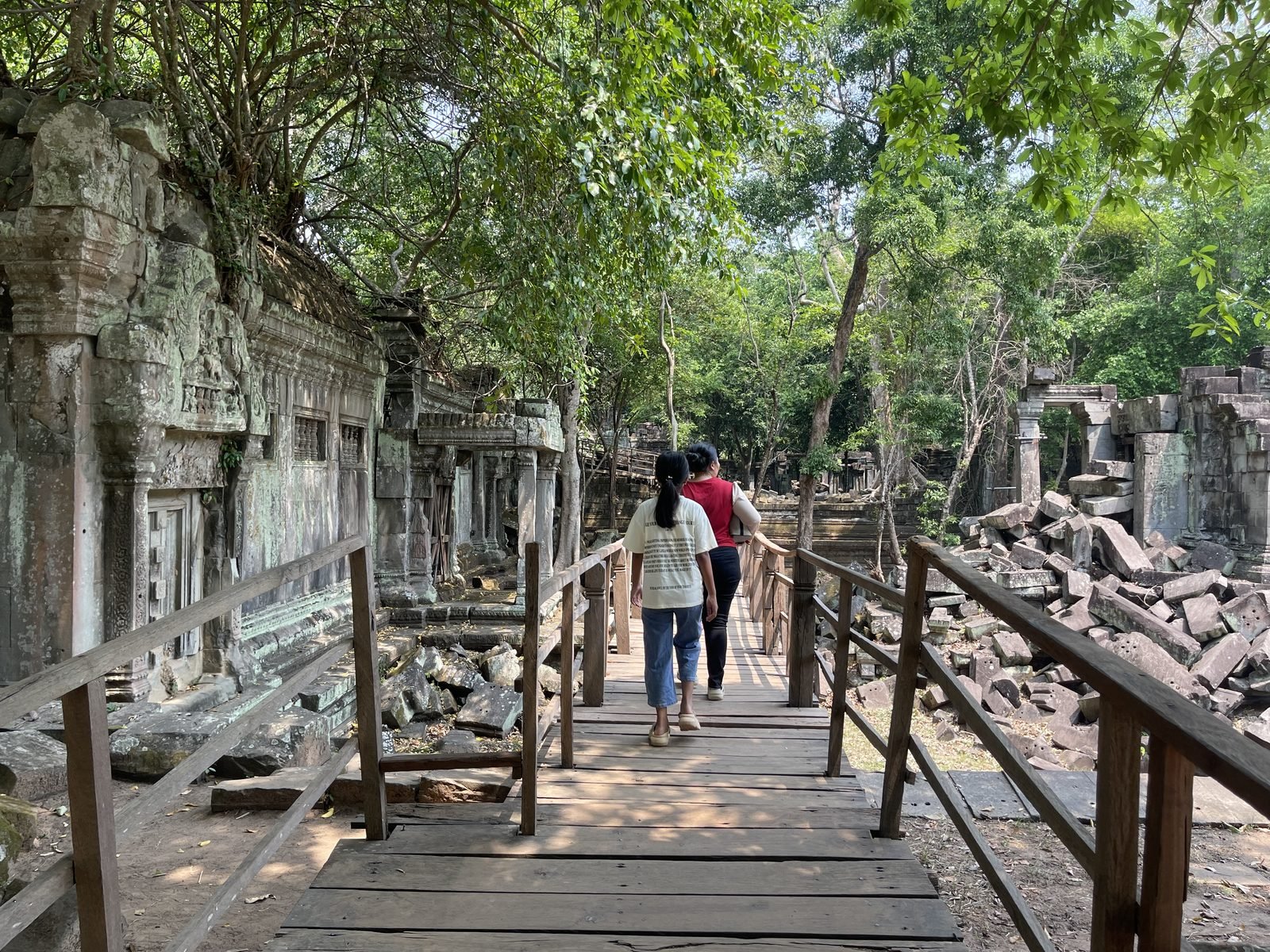
A vast, largely unrestored temple ~60–70 km from Siem Reap, similar in plan to Angkor Wat but swallowed by jungle. Wooden walkways allow exploration of the collapsed galleries. Feels remote and adventurous. Often combined with Koh Ker on a long day trip.
- Distance: ~65 km northeast
- Allow: 1.5–2 hours on site + travel
- Note: Separate entrance fee; not covered by the standard Angkor pass
Phnom Kulen & Kbal Spean
- Phnom Kulen National Park — Sacred mountain where the Khmer Empire is said to have begun. Waterfalls, riverbed carvings of lingas, and a large reclining Buddha. Day-trip destination with park entrance fee.
- Kbal Spean (“Valley of 1,000 Lingas”) — Riverbed sculptures of Hindu symbols and deities in the forest north of Banteay Srei. Short hike required.
Tonle Sap Lake & Floating Villages
Southeast Asia’s largest freshwater lake expands dramatically in the wet season. Nearby floating and stilted villages offer boat trips and insight into lake life. Choose responsible operators that support local communities.
- Kampong Phluk — Stilted village in flooded forest; dramatic in high water season
- Kampong Khleang — Larger, more authentic floating/stilt community further from the tourist trail
- Chong Kneas — Closest floating village area to Siem Reap (more commercial)
Boat trips typically US$15–40 depending on group size and village. Best arranged with a licensed guide or reputable tour operator.
Siem Reap Town – Culture, Markets & Experiences
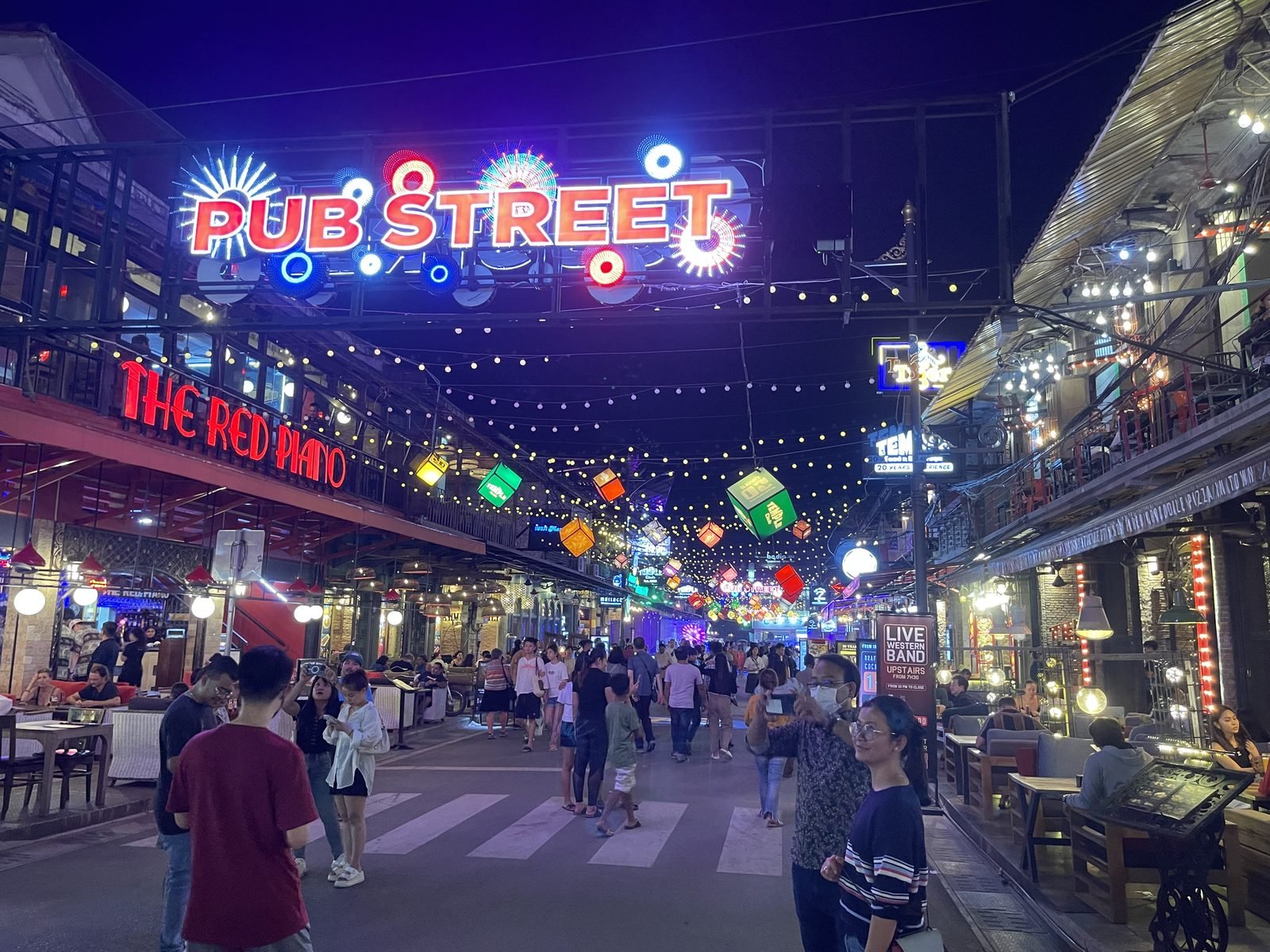
- Pub Street & Old Market (Psar Chas) — Lively evening area with restaurants, bars, souvenir shops and the Night Market. Good for casual dining and people-watching.
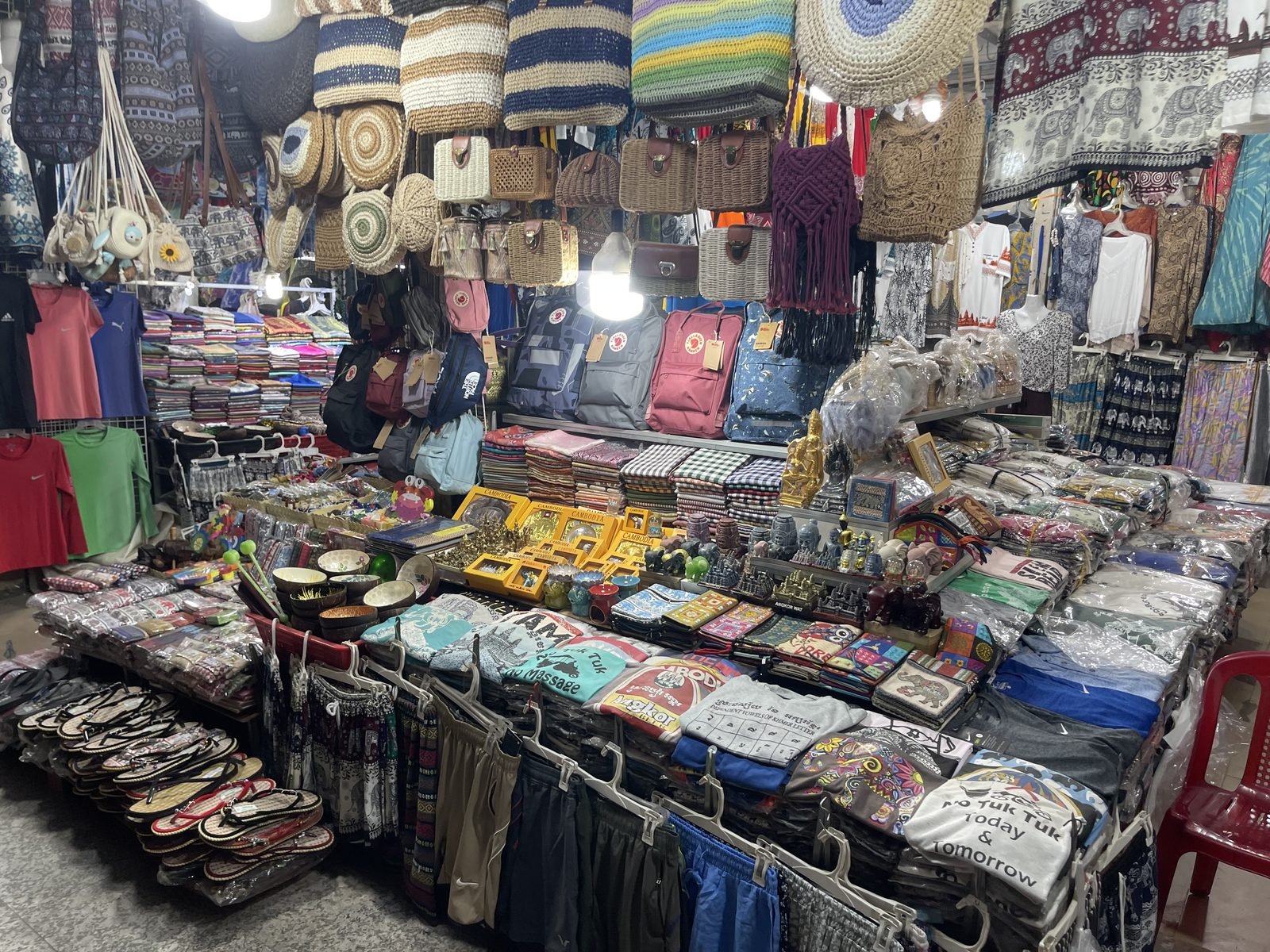
- Angkor Night Market — Souvenirs, street food, massages and handicrafts.
- Angkor National Museum — Excellent introduction to Angkor history, religion and art before or after temple visits.
- Phare, the Cambodian Circus — High-energy circus show combining acrobatics, music and storytelling; supports arts education for vulnerable youth.
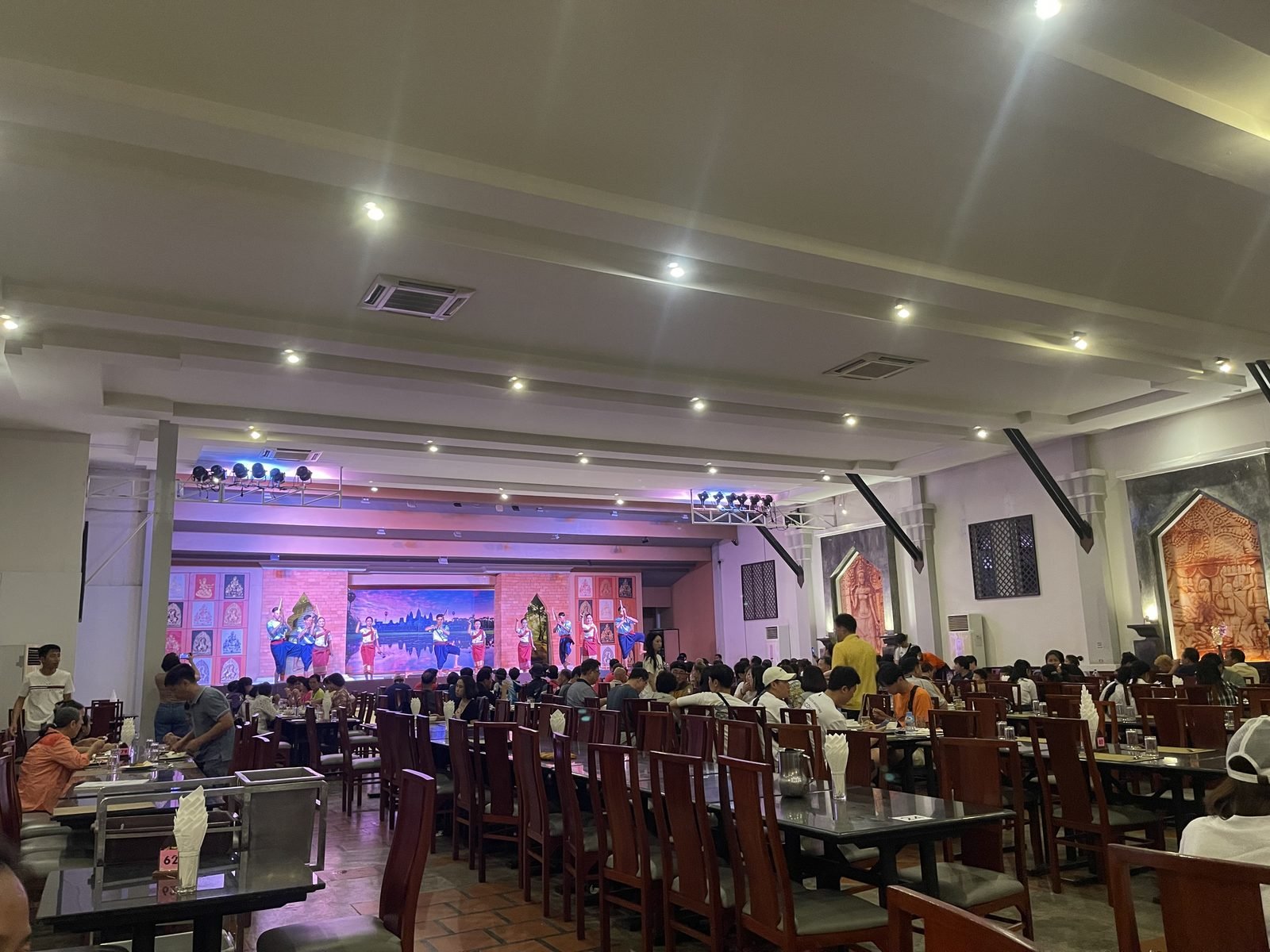
- Apsara dance performances — Classical Khmer dance dinner shows at hotels and cultural venues.
- Artisans Angkor & silk farms — Workshops demonstrating traditional stone carving, woodwork, lacquer and silk weaving; fair-trade style shopping.
- Cambodia Landmine Museum — Educational museum founded by a former child soldier; important context on the country’s recent history.
- War Museum Cambodia — Outdoor collection of military hardware from recent conflicts.
- Cooking classes — Half-day Khmer cooking classes widely available; often include market visits.
- Countryside tours — Bicycle, e-bike or tuk-tuk tours to rice paddies, villages, local pagodas and craft workshops.
- Spa & wellness — High-quality spa treatments at hotels and dedicated wellness centres.
Suggested Temple Circuits
- Small Circuit (≈17 km) — Angkor Wat → Angkor Thom (Bayon, Terraces) → Ta Prohm → Banteay Kdei / Srah Srang. Ideal for a first full day.
- Grand Circuit (≈26 km) — Preah Khan → Neak Pean → Ta Som → East Mebon → Pre Rup. Often combined with parts of the Small Circuit over 2–3 days.
- Banteay Srei + countryside — Morning at Banteay Srei, optional Kbal Spean or local villages.
- Roluos Group — Easy half-day east of town.
- Beng Mealea / Koh Ker — Full day trip for remote, jungle-covered temples.
A licensed local guide greatly enriches the experience with history, symbolism and practical tips. Tuk-tuk, private car or bicycle are the usual ways to move between sites.
How to Go
By air: Siem Reap–Angkor International Airport (SAI / new airport) has regional and some long-haul connections. Airport transfers to town take about 20–40 minutes depending on traffic and hotel location.
By road: From Phnom Penh the modern highway takes approximately 5–6 hours by bus, minivan or private car. Comfortable tourist buses (Giant Ibis, Mekong Express, Virak Buntham and others) run several times daily. Private drivers offer door-to-door flexibility and can stop at intermediate attractions.
Getting around: Tuk-tuks for town and temple circuits; private cars with driver for longer days and remote sites; bicycles and e-bikes for short distances and countryside.
Where to Stay
Siem Reap has an outstanding range of accommodation:
- Luxury / 5-star: Park Hyatt Siem Reap, Shinta Mani Angkor, Belmond La Résidence d’Angkor, Raffles Grand Hotel d’Angkor, Anantara Angkor Resort, Sofitel Angkor Phokeethra
- Boutique / 4-star: FCC Angkor by Avani, Navutu Dreams Resort & Spa, La Résidence Blanc d’Angkor, Jaya House River Park, The Aviary Hotel
- Mid-range / 3-star: Steung Siemreap Hotel, Frangipani Villa Hotel, The Villa Siem Reap, Angkor Pearl Hotel
- Guesthouse / budget: Golden Temple Villa, Onederz Hostel, Mad Monkey Siem Reap, Shadow of Angkor Guesthouse
Many properties arrange temple transport, guides and tours. Staying slightly outside the Pub Street core often means quieter nights and nicer gardens or pools.
Where to Eat
- Fine Khmer / modern: Cuisine Wat Damnak, Embassy, Chanrey Tree, Malis Siem Reap
- Social-enterprise / training: Marum (supports vulnerable youth)
- Classic Khmer: The Sugar Palm, Khmer Kitchen Restaurant
- Casual & Pub Street: Wide choice of Khmer, Asian and Western restaurants, bars and night-market stalls
- Hotel dining: Many 4- and 5-star hotels have excellent Khmer and international restaurants open to non-guests
Cooking classes are widely available and a great way to learn about local ingredients and techniques.
Fees, Guides & Practical Tips
Entrance & guide fees (approximate)
- Angkor Archaeological Park pass (official): 1-day US$37 · 3-day US$62 · 7-day US$72 (prices subject to change; buy at the official ticket office or online when available).
- Other sites (Beng Mealea, Phnom Kulen, floating villages, some countryside temples) often charge separate fees (typically US$5–20).
- Licensed guide (Angkor): roughly US$25–45 half day / US$40–70 full day (depends on language and group size).
- Tuk-tuk for a standard temple day: approximately US$15–25; private car higher.
Fees change; always confirm on site or with your guide. Carry clean USD notes for tickets and small purchases.
- Dress code at temples: shoulders and knees covered; remove shoes and hats when required.
- Sunrise at Angkor Wat is popular — arrive early and expect crowds.
- Support community-based and responsible tourism, especially at floating villages and rural sites.
- Stay hydrated, use sun protection and respect ongoing restoration work and sacred spaces.
More Information
Buy Angkor tickets only from the official ticket office (or the official online channel when available). A good licensed guide transforms a temple visit from “looking at stones” into a rich cultural and historical experience. Combine main-circuit temples with at least one quieter or countryside site (Banteay Srei, Roluos, Beng Mealea or a floating village) for a more complete picture of the region.
For broader trip planning see Accommodation, Restaurants, Travel Info and Cambodian Martial Arts.